This is partner content from Bioclinic Naturals
The Scope of Environmental Toxins Today
The concentration and number of toxic compounds in the environment are increasing at an alarming rate. (1) Primary exogenous environmental toxins include heavy metals, persistent organic pollutants, solvents and plasticisers. (1) A growing body of research indicates that excessive exposure to environmental toxins results in metabolic damage and significant disruption to body functions, with many correlations between toxic load and disease burden. (1)
Bioclinic Naturals – Setting the Industry Standard for Testing with ISURA®
Bioclinic Naturals is committed to providing the highest-quality products with the purest ingredients. As such, we rigorously test all of our products.
Product authentication, purity and potency are the cornerstones of producing high-quality supplements. All Australian companies in the health industry have to comply with standards set by the TGA. However, it is the rare few that exceed these standards that truly stand out.
All Bioclinic Naturals products are independently third-party tested by ISURA® - an independent, non-profit analytical testing and certification organisation that verifies there are no contaminants present in supplements. ISURA® certification means higher-quality products and informed choices for practitioners.
Testing for Pesticide Residues
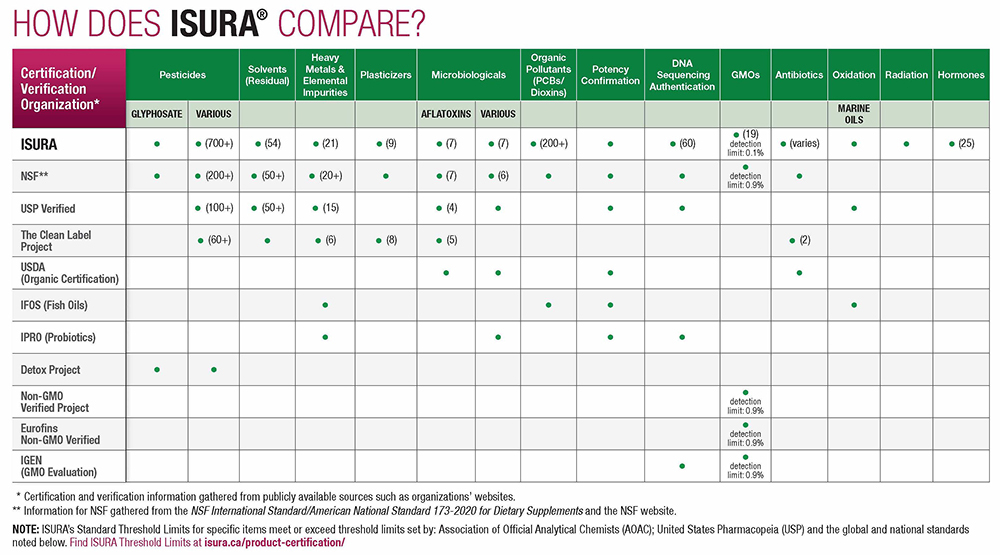
ISURA® tests for over 600 contaminants, including toxic heavy metals, pesticides, persistent organic pollutants (dioxins, PCBs, PAHs), solvent residues, and microbiological contaminants. ISURA® also tests for glyphosate. The standards for ISURA®’s certification for natural health products are among the world’s highest.
How Does ISURA® Testing Compare to Other Organisations?
To earn the ISURA® seal of approval, a product must undergo a battery of laboratory tests that confirm the product’s ingredients are:
- Non-GMO compliant
- Adulterant-free
- Authenticated
- Accurately labelled
Why Glyphosate Testing Matters
Glyphosate is present in the world’s most popular herbicide - Roundup. It is a non-selective weed killer that kills plants by inhibiting a metabolic pathway called the shikimate pathway. This pathway is crucial for plants and some microorganisms, but does not exist in humans. (2,3)
The Centre for Disease Control (CDC) also recently released findings that up to 80% of Americans may have traces of Roundup in their urine, showing they have been exposed to it. Considering that 200 million pounds of Roundup are likely sprayed annually on U.S. crops, it is not surprising most of the population has been exposed to it. (4)
Studies have linked higher glyphosate exposure to a number of neurological concerns, such as lower cognitive scores and depressive symptoms.(5,6) Preliminary research has also shown glyphosate to be an endocrine disruptor.(7,8,9,10,11,12,13)
Detoxification Resources
Bioclinic Naturals is committed to providing the highest-quality practitioner-only products and resources to help you and your patients navigate protocols for the detoxification of environmental toxins.
Bioclinic Naturals offers extensive detoxification resources, including:
Environmental Exposure Questionnaire

Environmental Exposure Questionnaire (Practitioner Interpretation Guide)

Detoxification Support for Clinicians

Detoxification Support Patient Guide

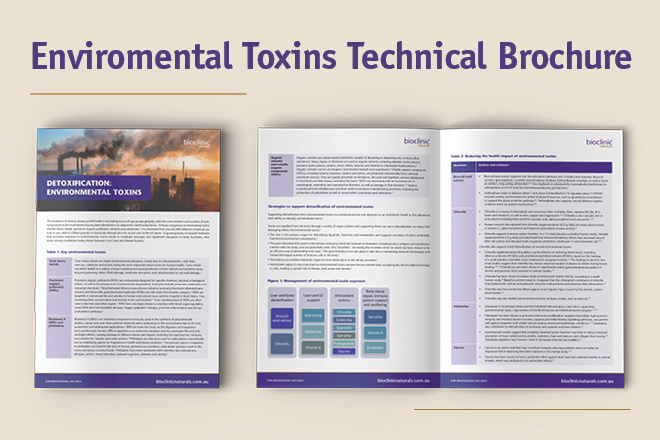
Environmental Toxins Technical Brochure