


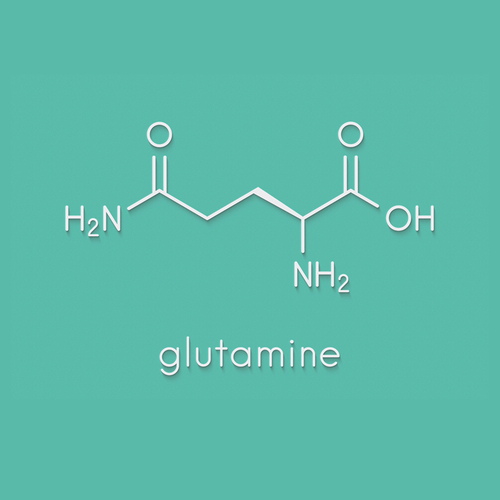
Glutamine
Scientific names: L-(+)-2-Aminoglutaramic acid
Alternative names: Acide L-(+)-2-Aminoglutaramique, Alanyl-L-Glutamine Dipeptide, Éthyle Ester de Glutamine, Éthyle Ester de Glutamine HCl, GLN, Glutamina, Glutaminate, Glutamine Ethyl Ester, Glutamine Ethyl Ester HCl, Glutamine Methyl Ester, Glutamine Peptides, Levoglutamide, Levoglutamine, L-Alanyl-L-Glutamine, L-Glutamic Acid 5-Amide, L-Glutamine, N-Acetyl-L-Glutamine, Peptides de Glutamine, Q
Actions: Anti-cytotoxic, Cardioprotective, Exercise performance, Gastrointestinal, Growth, Hepatoprotective, Immune, Muscle developing, Muscle sparing, Weight, Wound-healing
Background
Glutamine is the most abundant amino acid found in the body. It's made in the muscles and transferred by the blood into different organ systems.
Glutamine is a building block for making proteins in the body. It's also needed to make other amino acids and glucose. Glutamine supplements might help gut function, immune function, and other processes, especially in times of stress when the body uses more glutamine.
People take glutamine for sickle cell disease, swelling (inflammation) of the pancreas (pancreatitis), to improve recovery after surgery, for injuries, and for complications of HIV/AIDS. It is also used for diarrhea, cystic fibrosis, obesity, lung cancer, and many other conditions, but there is no good scientific evidence to support most of these other uses.
Glutamine (Endari) is approved by the US FDA as a prescription drug for sickle cell disease. Don't confuse glutamine with glutamate or glutamic acid. These are not the same.
Glutamine is a building block for making proteins in the body. It's also needed to make other amino acids and glucose. Glutamine supplements might help gut function, immune function, and other processes, especially in times of stress when the body uses more glutamine.
People take glutamine for sickle cell disease, swelling (inflammation) of the pancreas (pancreatitis), to improve recovery after surgery, for injuries, and for complications of HIV/AIDS. It is also used for diarrhea, cystic fibrosis, obesity, lung cancer, and many other conditions, but there is no good scientific evidence to support most of these other uses.
Glutamine (Endari) is approved by the US FDA as a prescription drug for sickle cell disease. Don't confuse glutamine with glutamate or glutamic acid. These are not the same.
Safety Safety definitions
When taken by mouth: Glutamine is likely safe when used in doses up to 40 grams daily. Side effects are generally mild and might include bloating, nausea, dizziness, heartburn, and stomach pain.
Children: Glutamine is likely safe when taken by mouth in doses up to 0.7 grams/kg body weight daily. There isn't enough reliable information to know if higher doses of glutamine are safe.
Liver disease: Glutamine can increase the risk for brain function issues in people with advanced liver disease. Do not use it if you have liver disease.
Bipolar disorder: Glutamine might increase the risk for mania or hypomania in people with this condition.
Monosodium glutamate (MSG) sensitivity: If you are sensitive to MSG, you might also be sensitive to glutamine. The body converts glutamine to glutamate.
Seizures: There is some concern that glutamine might increase the likelihood of seizures in some people. Avoid use.
Special Precautions & Warnings:
Pregnancy and breast-feeding: Glutamine is consumed as part of the diet. There isn't enough reliable information to know if glutamine is safe to use in larger amounts as a medicine when pregnant or breast-feeding. Stay on the safe side and avoid use.Children: Glutamine is likely safe when taken by mouth in doses up to 0.7 grams/kg body weight daily. There isn't enough reliable information to know if higher doses of glutamine are safe.
Liver disease: Glutamine can increase the risk for brain function issues in people with advanced liver disease. Do not use it if you have liver disease.
Bipolar disorder: Glutamine might increase the risk for mania or hypomania in people with this condition.
Monosodium glutamate (MSG) sensitivity: If you are sensitive to MSG, you might also be sensitive to glutamine. The body converts glutamine to glutamate.
Seizures: There is some concern that glutamine might increase the likelihood of seizures in some people. Avoid use.
Effectiveness
NatMed Pro rates effectiveness based on scientific evidence according to the following scale: Effective, Likely Effective, Possibly Effective, Possibly Ineffective, Likely Ineffective, Ineffective, and Insufficient Evidence to Rate.
Effective Effectiveness definitions
- Sickle cell disease. A specific glutamine product (Endari, Emmaus Medical, Inc) is a US FDA-approved prescription drug for sickle cell disease. Taking it by mouth reduces sudden complications of sickle cell disease.
Possibly effective Effectiveness definitions
- Critical illness (trauma). Taking glutamine by mouth or by IV seems to reduce complications in critically ill adults. But it doesn't seem to reduce the risk of death. IV products can only be given by a healthcare provider.
- Involuntary weight loss in people with HIV/AIDS. Taking glutamine by mouth seems to help HIV/AIDS patients absorb food better and gain weight.
- Swelling (inflammation) of the pancreas (pancreatitis). Taking glutamine by mouth or by IV seems to reduce complications from this condition. It may also shorten the total time spent in the hospital.
- Recovery after surgery. Giving glutamine by IV seems to reduce the number of days spent in the hospital after surgery. But it doesn't seem to reduce the risk of death after any type of surgery. IV products can only be given by a healthcare provider.
Possibly ineffective Effectiveness definitions
- Athletic performance. Taking glutamine by mouth doesn't seem to improve athletic performance.
- Burns. Administering glutamine through a feeding tube does not seem to improve healing in people with severe burns.
- A type of inflammatory bowel disease (Crohn disease). Taking glutamine by mouth doesn't seem to improve symptoms of Crohn disease.
- An inherited condition that can lead to kidney or bladder stones (cystinuria). Taking glutamine by mouth doesn't seem to improve symptoms of this condition.
- Infants weighing less than 2500 grams (5 pounds, 8 ounces). Giving glutamine to infants by mouth doesn't seem to improve side effects from low birth weight.
- A group of inherited disorders that cause muscle weakness and muscle loss (muscular dystrophy). Taking glutamine by mouth doesn't improve muscle strength in children with muscular dystrophy.
- Growth and development in premature infants. Giving glutamine by mouth doesn't seem to prevent illness or death in premature infants.
- Diarrhea caused by radiation therapy. Taking glutamine by mouth doesn't prevent diarrhea or reduce the severity of diarrhea caused by radiation therapy.
Dosing & administration
Glutamine has most often been used by adults in doses of 15-30 grams by mouth daily for up to 12 months. Speak with a healthcare provider to find out what dose might be best for a specific condition.
For information on using prescription glutamine, a product called Endari, speak with a healthcare provider.
For information on using prescription glutamine, a product called Endari, speak with a healthcare provider.
Interactions with pharmaceuticals
Medications used to prevent seizures (Anticonvulsants)
Interaction Rating=Moderate Be cautious with this combination.
Glutamine may increase the risk of seizures in some people. Therefore, taking glutamine may decrease the effects of medications used to prevent seizures.
Interactions with herbs & supplements
There are no known interactions with herbs and supplements.
Interactions with foods
There are no known interactions with foods.
Products
View all products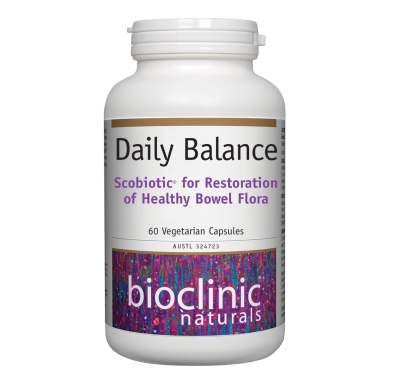
Per capsule:
- L-glutamic acid 25 mg
- Glutamic acid hydrochloride 25 mg
- Echinacea angustifolia ext. 25 mg
- Saccharomyces cerevisiae (SB) 35.72 mg equiv. bakers yeast beta glucan 178.6 mg
- Cichorium intybus powder 33.19 mg
- Bifidobacterium animalis ssp. lactis 0.5 billion CFU
- Bifidobacterium bifidum 0.5 billion CFU
- Bifidobacterium infantis 0.5 billion CFU
- Lactobacillus acidophilus 0.5 billion CFU
- Lactobacillus brevis 0.25 billion CFU
- Lactobacillus casei 0.25 billion CFU
- Lactobacillus delbrueckii ssp. bulgaricus 0.25 billion CFU
- Lactobacillus fermentum 0.25 billion CFU
- Lactobacillus gasseri 0.25 billion CFU
- Lactobacillus helveticus 0.25 billion CFU
- Lactobacillus paracasei 0.5 billion CFU
- Lactobacillus plantarum 0.25 billion CFU
- Lactobacillus reuteri 0.25 billion CFU
- Lactobacillus rhamnosus 0.25 billion CFU
- Lactobacillus salivarius 0.25 billion CFU
- Lipase 600 LipU
- Polyporus umbellatus powder 50 mg
- Grifola frondosa powder 50 mg
- Cordyceps sinensis powder 50 mg
- Ganoderma lucidum powder 25 mg
- Poria cocos ext. 25 mg
- Arthrospira platensis (Spirulina) 55 mg
- Yeast 25 mg equiv. selenium 50 µg
- Iberis amara ext. 50 mg
- Apple pectin 25 mg
- Yucca gloriosa ext. 25 mg
Practitioner product
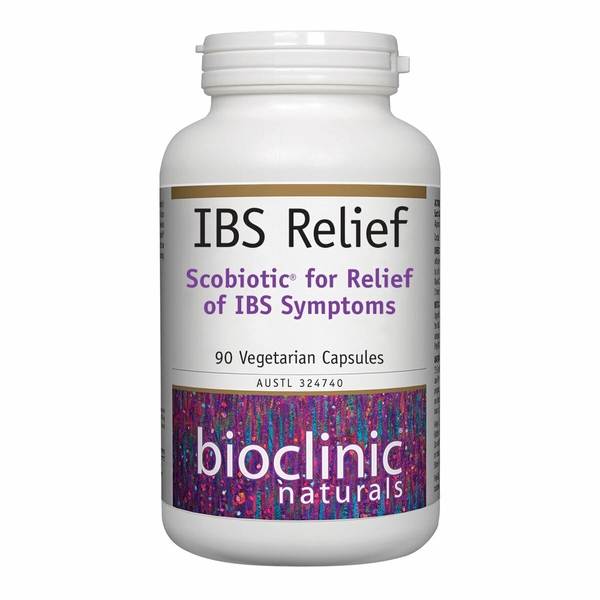
Per capsule:
- L-glutamic acid 33.3 mg
- Glutamic acid hydrochloride 33.3 mg
- Saccharomyces cerevisiae (SB) 11.9 mg equiv. bakers yeast beta glucan 59.5 mg
- Bifidobacterium longum ssp. infantis 1.33 billion CFU
- Lactobacillus acidophilus 1.33 billion CFU
- Lactobacillus casei 1.33 billion CFU
- Lactobacillus gasseri 0.67 billion CFU
- Lactobacillus paracasei 1.33 billion CFU
- Lactobacillus plantarum 1.33 billion CFU
- Lactobacillus reuteri 0.67 billion CFU
- Lactobacillus rhamnosus 0.67 billion CFU
- Lactobacillus salivarius 0.67 billion CFU
- Streptococcus thermophilus 0.67 billion CFU
- Saccharomyces cerevisiae (boulardii) (SB) 8.33 mg
- Saccharomyces cerevisiae (Brewer’s yeast) 8.33 mg
- Ganoderma lucidum powder 83.33 mg
- Yeast 8.33 mg equiv. chromium 16.67 µg
- Yeast 10.41 mg equiv. molybdenum 20.8 µg
- Yeast 24.6 mg equiv. selenium 49 µg
- Colostrum - bovine 33.3 mg
- Iberis amara ext. 33.3 mg
- Yucca gloriosa ext. 33.34 mg
Practitioner product
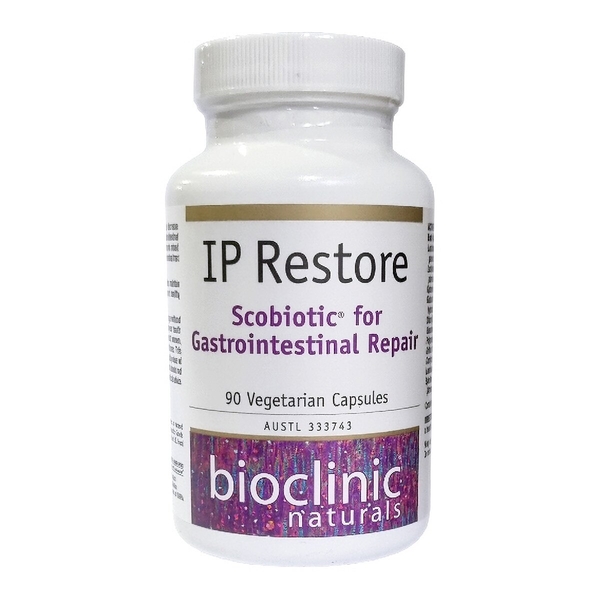
Per capsule:
- L-glutamic acid 16.67 mg
- Glutamic acid hydrochloride 16.67 mg
- Lactobacillus gasseri 0.67 billion CFU
- Lactobacillus plantarum 0.67 billion CFU
- Saccharomyces cerevisiae (SB) 47.62 mg equiv. bakers yeast beta glucan 232 mg
- Cichorium intybus powder 44.44 mg
- Ganoderma lucidum powder 83.33 mg
- Polyporus umbellatus powder 16.67 mg
- Grifola frondosa powder 66.67 mg
- Cordyceps sinensis powder 50 mg
- Lentinula edodes powder 50 mg
- Arthrospira platensis (Spirulina) 33.33 mg
- Saccharomyces cerevisiae (boulardii) (SB) 16.67 mg
- Yeast 8.33 mg equiv. chromium 16.66 µg
- Yeast 10.42 mg equiv. molybdenum 20.83 µg
- Iberis amara ext. 33.3 mg
Practitioner product
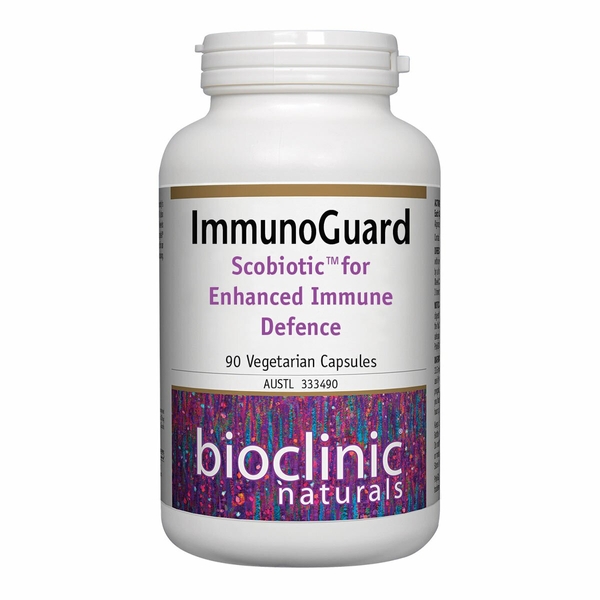
Per capsule:
- L-glutamic acid 15 mg
- Glutamic acid hydrochloride 15 mg
- Lactobacillus gasseri 0.75 billion CFU
- Lactobacillus plantarum 0.75 billion CFU
- Saccharomyces cerevisiae (SB) 50 mg equiv. bakers yeast beta glucan 250 mg
- Saccharomyces cerevisiae (boulardii) (SB) 17 mg
- Yeast 8.33 mg equiv. chromium 16.66 µg
- Yeast 10.42 mg equiv. molybdenum 20.8 µg
- Cichorium intybus powder 40 mg
- Ganoderma lucidum powder 92.5 mg
- Polyporus umbellatus powder 16.67 mg
- Grifola frondosa powder 66.67 mg
- Cordyceps sinensis powder 55 mg
- Lentinula edodes powder 55 mg
- Iberis amara ext. 36.6 mg
- Arthrospira platensis (Spirulina) 30 mg
Practitioner product
.png "<img src='https://images.vital.ly/tr:w-350,c-at_max,dpr-2,q-100/ATP_Science_Glutamine_500_g_(1).png' />")

Practitioner product
$56.51
Create account
Practitioner product
Practitioner product
Practitioner product
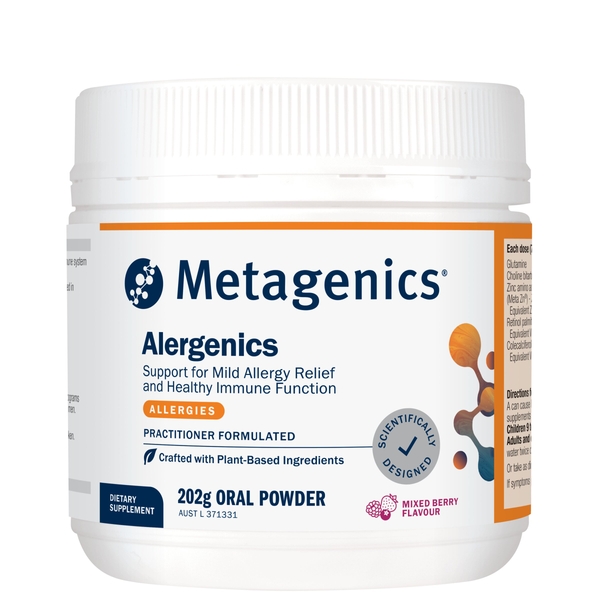
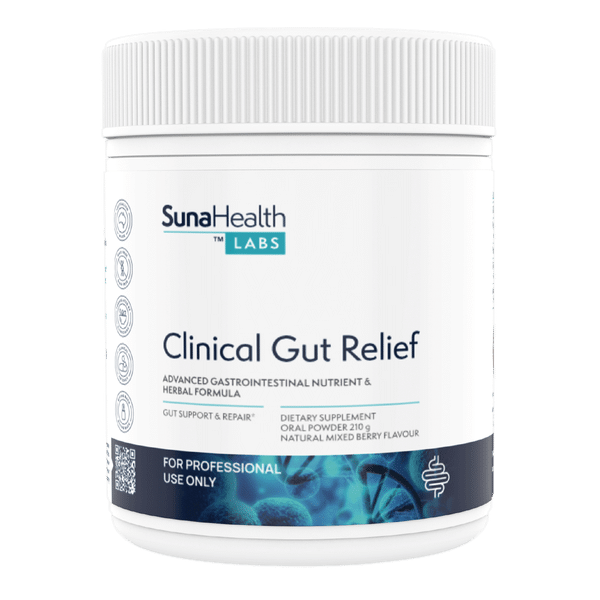
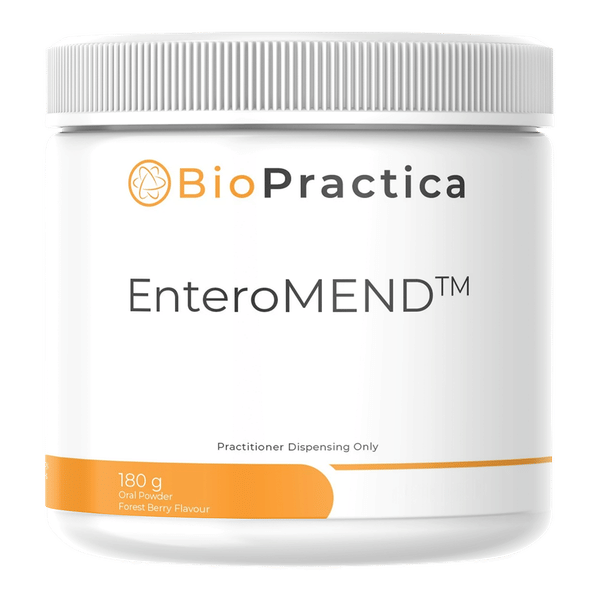
Per 7.2 g (Mixed Berry):
- L-glutamine 3.5 g
- Ganoderma lucidum ext. 353 mg
- Lentinula edodes ext. 375 mg
- Scutellaria baicalensis ext. 300 mg
- Perilla frutescens ext. 208 mg
- Choline bitartrate 1.5 g
- Retinol palmitate 1.4 mg equiv. vitamin A 750 μg RE
- Cholecalciferol (Vitamin D3) 12.5 μg equiv. vitamin D 500 IU
- Silybum marianum ext. 86 mg
- Zinc bisglycinate (Zinc amino acid chelate) 30 mg equiv. zinc 6 mg
Practitioner product
$53.50
Create account
Practitioner product
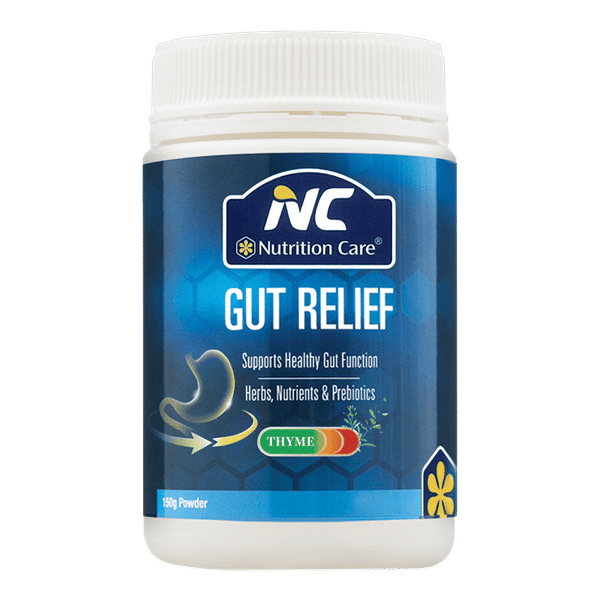
Per 5 g:
$49.95
Create account
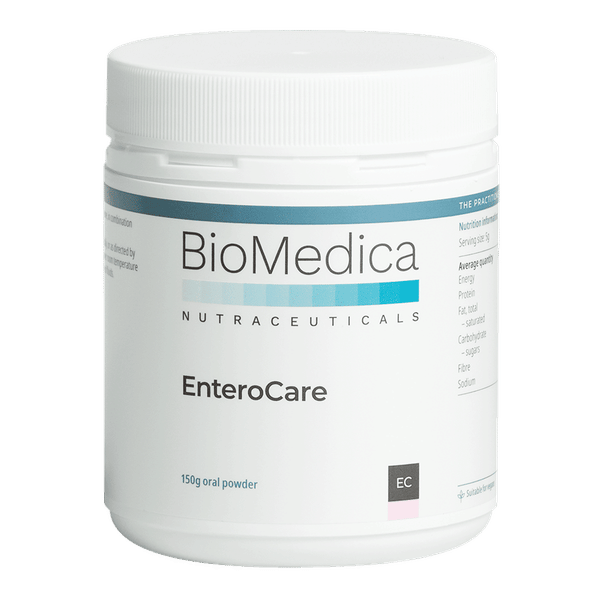

Practitioner product
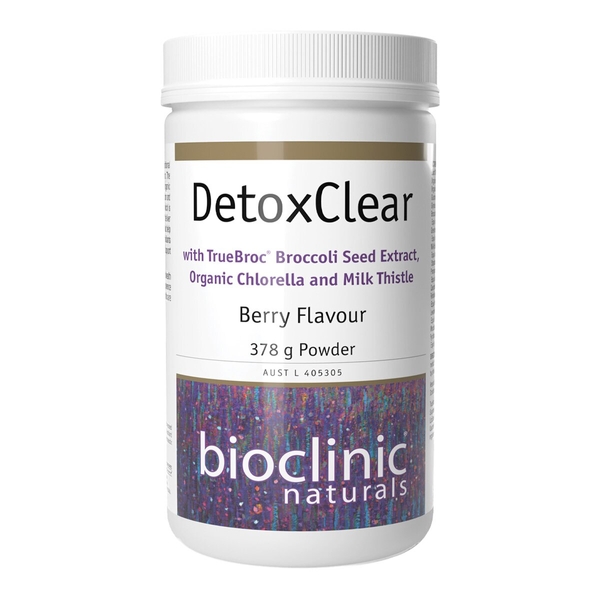
Per 13.5 g (Berry):
- Glutamine 2.5 g
- Arthrospira platensis (Spirulina) 3 g
- Brassica oleracea var. italica ext. 75 mg
- Camellia sinensis ext. 300 mg
- Silybum marianum ext. 250 mg
- Quercetin dihydrate 150.4 mg
- Levomefolate glucosamine (Activated folate) 444.92 µg equiv. levomefolic acid 250 µg
- Glycine 500 mg
- Punica granatum ext. 25 mg
- Retinol palmitate 409.9 mg equiv. vitamin A 225 µg RE
- Mecobalamin (Vitamin B12) 500 µg
- Pyridoxal 5-phosphate monohydrate (P5P) 18.26 mg equiv. pyridoxine 12.5 mg
- Chlorella vulgaris powder 3 g
Practitioner product
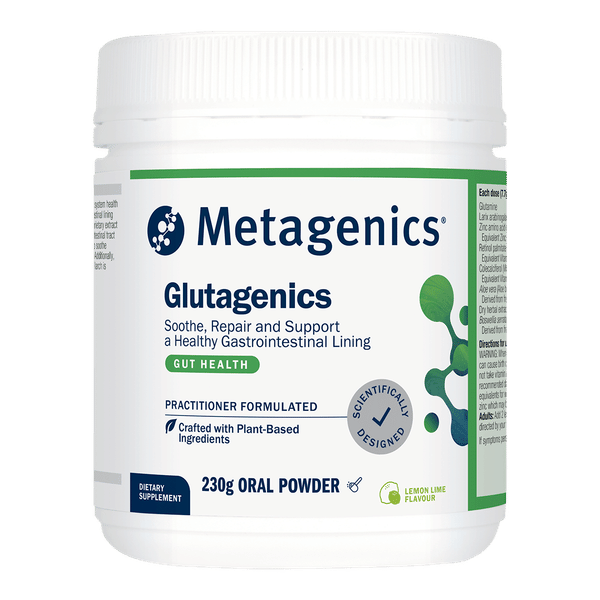
Per 7.7 g (Lemon Lime):
Practitioner product
Practitioner product
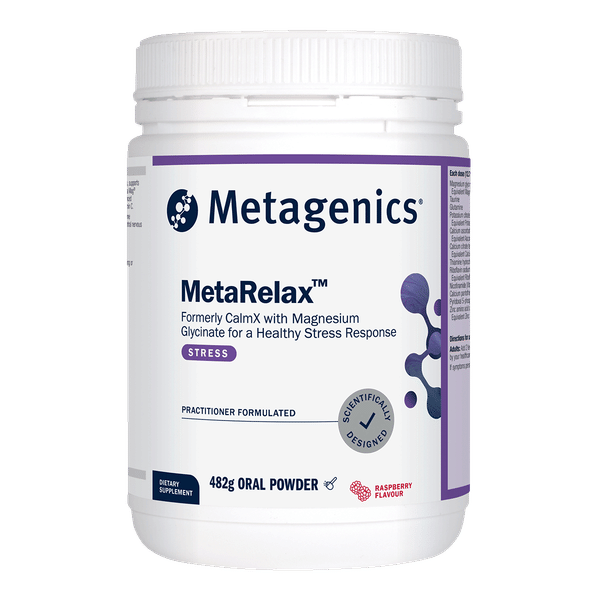
Per 12.7 g (Raspberry):
- L-glutamine 2 g
- Magnesium bisglycinate 3.5 g equiv. magnesium 350 mg
- Taurine 3 g
- Potassium citrate 275 mg equiv. potassium 100 mg
- Calcium ascorbate dihydrate (Vitamin C) 605 mg equiv. ascorbic acid 500 mg
- Thiamine hydrochloride (Vitamin B1) 25 mg
- Riboflavin 5-phosphate sodium (Activated B2) 34 mg equiv. riboflavin 25 mg
- Nicotinamide (Vitamin B3) 25 mg
- Calcium pantothenate (Vitamin B5) 25 mg
- Pyridoxal 5-phosphate monohydrate (P5P) 25 mg equiv. pyridoxine 16 mg
- Zinc bisglycinate (Zinc amino acid chelate) 50 mg equiv. zinc 10 mg
- Calcium citrate tetrahydrate 711 mg equiv. calcium 150 mg
482 g Raspberry
Practitioner product
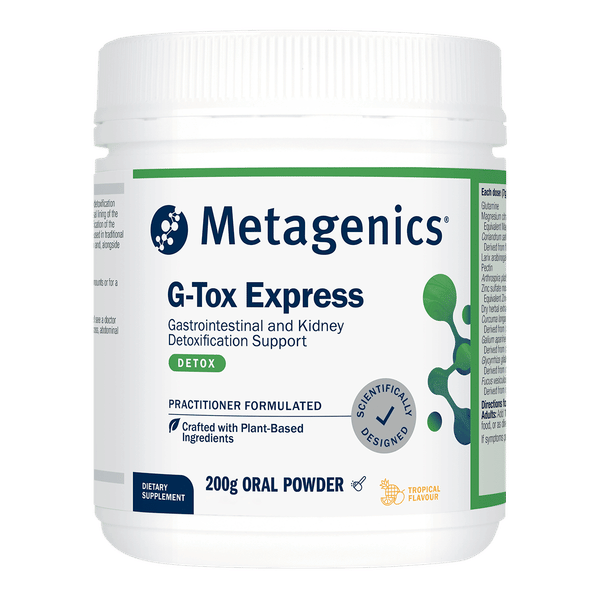
Per 7 g (Tropical):
- L-glutamine 2 g
- Galium aparine ext. 500 mg
- Zinc sulphate monohydrate 41 mg equiv. zinc 15 mg
- Curcuma longa ext. 152 mg
- Glycyrrhiza glabra deglycyrrhizinised ext. 313 mg
- Coriandrum sativum ext. 56 mg
- Fucus vesiculosus ext. 50 mg
- Pectin 500 mg
- Larix occidentalis (arabinogalactan) (Larch) 1 g
- Magnesium citrate 1.3 g equiv. magnesium 210 mg
- Arthrospira platensis (Spirulina) 500 mg
Practitioner product
vital.ly has licensed monographs from TRC Healthcare.
This monograph was last reviewed on 07/04/2025 10:00:00 and last updated on 01/12/2020 03:11:25. Monographs are reviewed and/or updated multiple times per month and at least once per year.
Natural Medicines disclaims any responsibility related to medical consequences of using any medical product. Effort is made to ensure that the information contained in this monograph is accurate at the time it was published. Consumers and medical professionals who consult this monograph are cautioned that any medical or product related decision is the sole responsibility of the consumer and/or the health care professional. A legal License Agreement sets limitations on downloading, storing, or printing content from this Database. No reproduction of this monograph or any content from this Database is permitted without written permission from the publisher. It is unlawful to download, store, or distribute content from this site.


Natural Medicines rates safety based on scientific evidence according to the following scale: Likely Safe, Possibly Safe, Possibly Unsafe, Likely Unsafe, Unsafe, and Insufficient Evidence to Rate. For more information about Natural Medicines’ Safety Rating System, click here.
The Natural Medicines Effectiveness Ratings are assigned for specific indications. A product might be rated "Possibly Effective" for one condition, but be rated "Likely Ineffective" for another condition, depending on the evidence. For more info click here.


